Loneliness, young people & AI
I’m currently at week 6 of our ten-week storytelling campaign, celebrating Sapcote Community Library’s 10th anniversary and raising money and awareness along the way. Some weeks I’ve known exactly what needed writing. This week, the reading I’ve done has genuinely stopped me in my tracks and made me think.
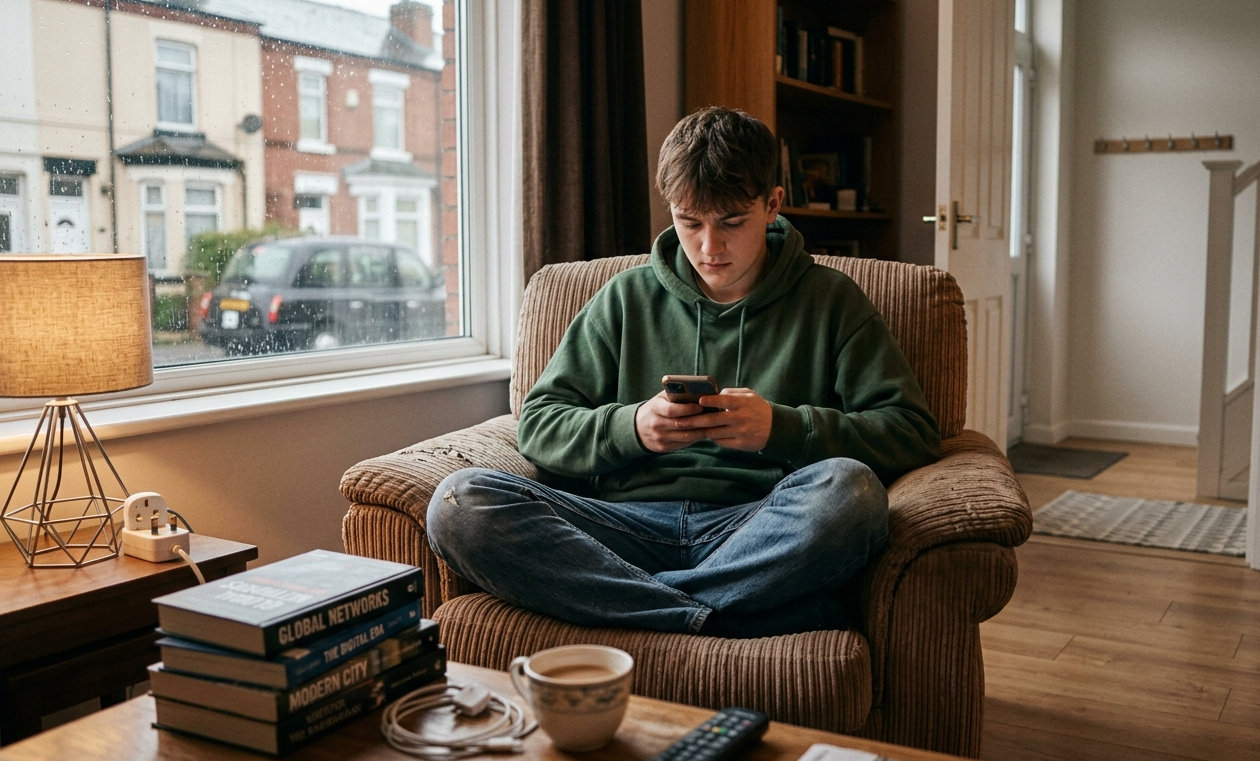
We all know community groups have a part to play in reducing loneliness. And I’d bet most of us assume it’s older people who suffer from it most. As a trustee at the library, I see that clearly that we’re in a rural location with ever-shrinking public transport, and isolation is real for many older residents. But it’s the impact on younger people that’s really made me stand back and think. There’s now what’s being described as an “epidemic of loneliness for young people”. Most of us have felt lonely at some point, but there’s something particularly awful about an entire generation facing it as a matter of course.
What’s made me think hardest is this piece on young people turning to AI for emotional and mental health support. The statistics are shocking, and honestly, thought-provoking.
Because none of this happened by accident. The moment AI assistants started getting human names – Alexa, Siri, Erica, Claude – the moment we started calling them “he” or “she,” the moment they became part of everyday life rather than a novelty, this was somewhat inevitable. Research on human-computer interaction backs this up: people are simply more comfortable with, and forgiving of, something that has a name and a personality, versus something obviously mechanical. That’s not an accident, it’s design.
This isn’t a piece however about doom, and I’m not anti-AI (although I used to be – I’ve found strengths in it). I use it, for proofreading, for research, for putting together marketing materials. But I’m not reliant on it; and it’s taught me that nothing quite replaces a human eye on something. I approach anything AI-produced with caution, and I’m genuinely glad to see writers and professionals moving back towards human-made content.
But that brings me back to the original article: young people, loneliness, and emotional reliance on AI. I have two children, 10 and 14, and I watched their formative years shaped by lockdown: the inability to socially connect face to face at ages when it mattered most. Friend’s with 16-year-olds who faced their first days at senior school during the first lockdown. Someone who’s 22 now would have been leaving senior school in that same period. Our daughter who was four during the first lockdown grew used to Granny reading bedtime stories over a screen. We marked a 5th and a 9th birthday with online family parties, we just couldn’t share the cake (which also had it’s benefits). Those years shaped what became “normal” for all of us, not just the young, video calls became routine, home and hybrid working became the norm (with very real and long term benefits to me as a working mum), and our use of online shopping is ever growing.
That’s the world our children have learned to connect in. And it’s not hard to see how the pull of tech, the human names, the humanised language, feels like a natural next step from there – even I feel a slight flicker of gratitude when my AI tells me it hopes I’m not working too late. But that’s exactly where the danger lies. The safety some young people feel talking to AI. The sense of being understood. The assumption that what it tells them must be right. They’re talking to an untrained bot, and leaning on it, and that’s genuinely dangerous.
Because that feeling, safety in connection, safety in belonging, safety in not feeling lonely, is the whole point. Nothing replaces face-to-face connection. Genuine care. Routine contact with others, at least three times a week, is said to meaningfully fend off loneliness. And this is exactly what Sapcote Community Library exists to be for people of every age.
We are incredibly proud to say that one third of all the footfall to the library are young people. We have an 18 year old trustee, the youngest trustee across all of Leicestershire Libraries (over the last 10 years we believe), representing the voices of young people. The three Duke of Edinburgh students have all completed their volunteering successfully, and all three have continued to stay on as volunteers, giving their time and appropriating the value they can bring to the library team – but also the value they feel from that team.
And we’re only broadening that reach. Graphic novels are rushing in and children are loving them. We’re investing in the summer reading challenge. We’re continuing to run “Wiggly Readers” throughout the summer holidays, welcoming the very youngest of readers. We’ve got a meet-the-author event next week, a talk from a rocket engineer in a month’s time, and we’ve even had children join the knitters on a Monday afternoon this summer.
None of that happens by accident. And none of it happens without funding.
Grants have been cut significantly, and every remaining pound is hard fought for, with everyone’s purse strings pulled tight. Last year, we received just 3% of the grant funding we had in our first year.
Volunteer effort to fundraise and diversify our income isn’t optional anymore. It’s essential.
Keeping the doors open to community assets like libraries is one of the keys to fending off loneliness and building thriving local communities. If you’d like to be part of keeping ours open, please come by for a visit or find out more about our fundraising campaign here https://tinyurl.com/Sapcote-Library
Thank you so much for taking the time to read this.